Oil is often called the “blood of industry” because of its essential role in modern civilization. Since large-scale oil exploration and production began, petroleum has transformed transportation, manufacturing, energy systems, and global economic development.
Behind every successful oil production project is the continuous evolution of drilling technology. From early manual excavation methods to today’s intelligent drilling systems capable of reaching thousands of meters underground, oil drilling has experienced a remarkable journey driven by engineering innovation, equipment advancement, and the pursuit of safer and more efficient operations.
The history of oil drilling is not only a story of drilling deeper wells. It represents humanity’s continuous efforts to understand underground formations, improve resource recovery methods, and develop technologies that can overcome increasingly complex geological challenges.
The earliest use of petroleum began with natural oil seepage appearing on the earth’s surface. Ancient civilizations collected these naturally occurring resources from riversides and rock formations and used them for lighting, waterproofing, lubrication, and other practical purposes.
As demand for petroleum increased, simple collection methods gradually evolved into manual excavation. Before the 16th century, early drilling operations were more similar to traditional well digging. Workers relied on basic tools such as shovels and picks to excavate shallow underground formations, usually reaching only limited depths.
At this stage, oil production depended heavily on natural conditions. Since drilling technology was still primitive, exploration success relied more on experience and the discovery of naturally occurring oil deposits.
China was one of the earliest regions to develop advanced well-drilling techniques. In the Zigong area of Sichuan, ancient salt-well drilling technology appeared as early as the Eastern Han Dynasty. The early form of percussion drilling used human-powered mechanisms to repeatedly strike underground formations with a drill bit. Some wells reached hundreds of meters deep, demonstrating remarkable engineering capability for that period.
These early drilling practices provided important foundations for future developments in underground resource exploration.
As shallow resources became increasingly insufficient, humans began searching for more effective ways to reach deeper formations. Between the 16th and 19th centuries, percussion drilling became an important method for underground exploration.
The system mainly consisted of a cable, walking beam, drill bit, and bailer. Workers repeatedly operated the beam to lift and drop the drill bit, breaking rock formations through impact force. After drilling for a certain period, the bailer was used to remove rock fragments from the well.
Compared with manual excavation, percussion drilling significantly improved drilling depth. However, the process remained slow and highly dependent on manpower. A single well could require many workers and months or even years of operation.
The technology also had limitations. Drilling efficiency was greatly affected by geological conditions, and hard rock formations could significantly slow progress. More importantly, operators had limited control over well direction and underground conditions.
At this stage, oil exploration was still largely based on experience rather than advanced scientific analysis. A major technological breakthrough was needed to support the rapid growth of the oil industry.
The Industrial Revolution introduced new mechanical power technologies that completely changed drilling operations.
In 1859, Edwin Drake successfully drilled a commercial oil well in Pennsylvania, USA, using steam-powered drilling equipment. The well reached a depth of approximately 21 meters and produced around 20 barrels of oil per day. This achievement is widely considered one of the milestones marking the beginning of the modern oil industry.
Mechanical percussion drilling replaced human power with steam-driven machinery. Through mechanical transmission systems, rotational motion was converted into vertical impact movement, allowing drill bits to break underground formations more efficiently.
This period introduced several important improvements:
Mechanical power greatly increased drilling efficiency.
Standardized components such as drill pipes and casing improved well stability.
More reliable drilling processes supported the expansion of commercial oil production.
However, mechanical percussion drilling still had clear limitations. Rock breaking and cuttings removal were performed separately, preventing continuous drilling. In addition, controlling well trajectory remained difficult, making it challenging to accurately reach complex reservoirs.
These limitations accelerated the development of a more advanced approach — rotary drilling.
In 1901, rotary drilling technology was commercially applied at the Spindletop oil field in Texas, USA, marking a major turning point in oil drilling history.
Unlike percussion drilling, rotary drilling uses a continuously rotating drill bit to break rock formations. At the same time, drilling fluid circulates through the drill string, cooling the drill bit, stabilizing the wellbore, and carrying rock cuttings back to the surface.
This “drilling while cleaning” approach greatly improved operational efficiency and became the foundation of modern oil and gas exploration.
The development of rotary drilling can be divided into several important stages.
During the early rotary drilling period, surface rotary tables provided the power required to rotate the drill string. With improvements in drill bit technology, drilling fluids, and well control methods, drilling depths gradually expanded beyond several thousand meters.
The application of weighting materials such as barite in drilling fluids improved pressure control in high-pressure formations. This advancement reduced well control risks and made deeper drilling operations possible.
Beginning in the 1960s, downhole motors such as turbine motors and positive displacement motors became increasingly important.
By placing the power source closer to the drill bit, these technologies reduced drill string wear and improved drilling efficiency. More importantly, they provided better control over well trajectory, creating the foundation for directional drilling and horizontal well technologies.
Since the 2000s, drilling technology has entered a new intelligent era.
Advanced rotary steerable systems, automated drilling platforms, and real-time monitoring technologies have transformed modern drilling operations. Engineers can now analyze geological information during drilling, optimize parameters, and make faster decisions based on real-time data.
Drilling fluid has also evolved from a simple cooling and cleaning medium into an important information carrier. Through measurement-while-drilling (MWD) and logging-while-drilling (LWD) technologies, underground geological information can be transmitted during drilling, helping operators improve accuracy and reduce operational risks.
Modern drilling is no longer simply a mechanical process. It has become a comprehensive engineering system integrating automation, digital technologies, geological analysis, and intelligent control.
As oil and gas exploration moves toward deeper formations and more complex reservoirs, global oilfield technology companies continue developing advanced drilling solutions.
Rotary steerable systems have become one of the most important technologies in modern directional drilling. These systems allow operators to control well trajectories with higher accuracy, improving reservoir contact and drilling efficiency.
Digital drilling platforms have also become increasingly important. By integrating geological data, drilling parameters, and operational information, these platforms can support drilling optimization, risk prediction, and performance improvement.
Automation technologies are further changing drilling operations. Intelligent systems can reduce manual intervention, improve operational consistency, and help drilling teams respond more quickly to unexpected conditions.
Together, these innovations are driving the oil industry toward safer, smarter, and more efficient drilling operations.
As drilling technology advances toward deeper and more challenging environments, well control has become one of the most critical aspects of modern oil and gas operations.
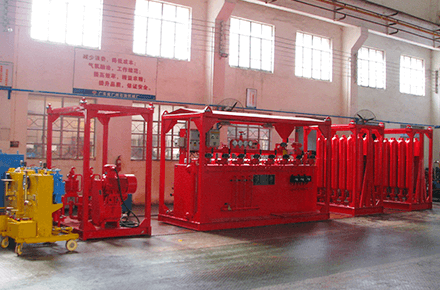
During drilling, unexpected pressure changes from underground formations can create serious risks. Equipment such as Blowout Preventer (BOP) control systems, choke manifold control panels, and high-pressure testing units play an essential role in maintaining pressure control, preventing blowouts, and ensuring operational safety.
With the development of intelligent drilling, well control equipment is also moving from traditional manual operation toward automated and remote-control solutions. These improvements allow operators to manage drilling risks more efficiently and improve safety in complex environments.
Guangzhou Dongsu Petroleum D&E Equipment Co., Ltd. has been dedicated to the research, development, and manufacturing of surface BOP control systems and related well control equipment. The company continuously invests in technological upgrading of its core products, including BOP control systems, choke manifold control panels, and high-pressure test units, to meet the evolving requirements of modern drilling operations.
A significant achievement of DongSu is the development of China’s first wireless remote-controlled BOP control system. The system was successfully deployed at the Tarim Oilfield, one of China’s most challenging oil and gas exploration regions.
Through real-world field applications, the wireless remote-controlled BOP system has demonstrated excellent safety, reliability, and operational performance. By reducing operational limitations and improving control flexibility, the technology provides drilling teams with safer and more efficient well control capabilities.
As drilling operations continue moving toward automation and intelligence, advanced well control equipment will remain a key factor in improving drilling safety and efficiency.
Although China’s oil drilling industry started later than some international markets, it has developed rapidly through continuous investment in research, engineering innovation, and practical applications.
Today, China has achieved significant progress in deep drilling, ultra-deep drilling, offshore exploration, and intelligent drilling technologies.
In deep and ultra-deep drilling projects, Chinese companies have developed advanced drill bits, high-strength casing technologies, and specialized drilling fluid systems to overcome extreme underground conditions involving high temperatures, high pressures, and complex formations.
Offshore oil and gas development has also achieved major breakthroughs through the combination of advanced drilling technologies, pressure control systems, digital management platforms, and intelligent equipment.
At the same time, intelligent drilling has become an important development direction. The integration of artificial intelligence, digital twins, automation systems, and real-time monitoring technologies is helping improve drilling efficiency and reduce operational risks.
However, continuous innovation remains essential. The future competitiveness of the industry will depend on advanced technology development, faster commercialization of research achievements, and stronger participation in the global market.
From early manual excavation to today’s intelligent drilling systems, the development of oil drilling technology reflects humanity’s continuous pursuit of deeper exploration, higher efficiency, and improved safety.
Future drilling operations will continue to integrate artificial intelligence, automation, advanced sensors, digital twins, and remote-control technologies. Intelligent drilling platforms will provide more accurate decision-making, while advanced well control systems will create safer operating environments.
For drilling equipment manufacturers, technological innovation will remain the key to future development. Products such as BOP control systems, choke manifold control panels, and high-pressure testing units will continue evolving from traditional mechanical equipment into intelligent solutions that support modern drilling operations.
With continuous investment in technology upgrades and engineering innovation, companies like DongSu are helping advance safer, smarter, and more reliable drilling solutions for the global oil and gas industry.
By continuing to use the site you agree to our privacy policy Terms and Conditions.