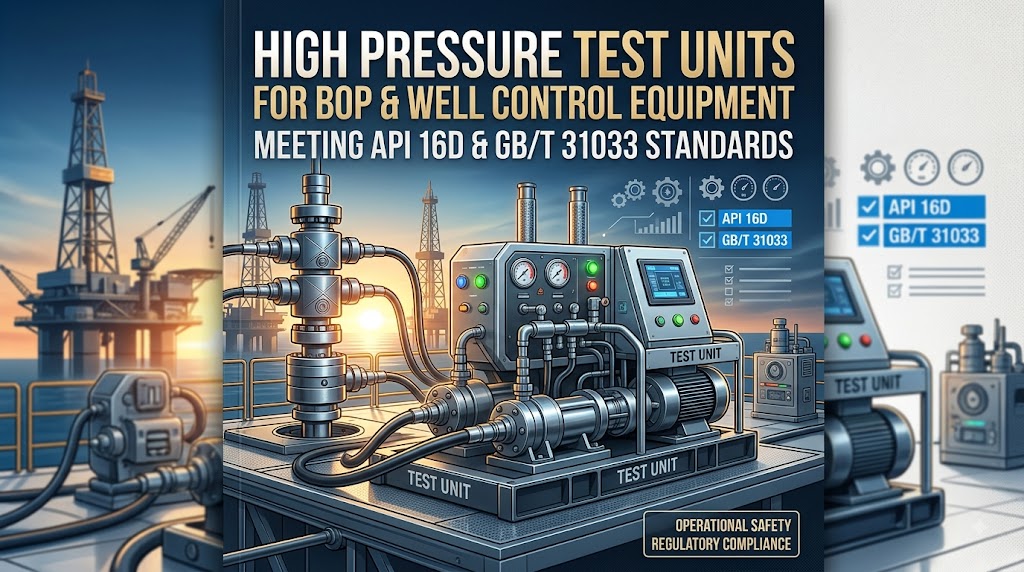
Industry downtime caused by equipment failure during well completion often traces back to inadequate pressure verification before deployment. Field operators face severe financial and safety risks when blowout preventers fail under sudden formation spikes. Addressing these vulnerabilities requires deploying robust testing hardware capable of validating structural limits prior to rig site installation.
Having established the commercial imperatives of pre deployment verification, let us examine how evolving regulatory frameworks shape equipment inspection routines.
Modern upstream oil and gas operations face strict oversight regarding environmental safety and well integrity. Regulatory bodies mandate rigorous verification protocols for every component in the well control string. Visual checks are no longer sufficient to satisfy compliance audits. Operators must provide traceable verification data for every pressure bearing element. This shift elevates test equipment from a routine workshop accessory to a critical compliance gatekeeper. Ensuring alignment with modern regulatory benchmarks protects field personnel and safeguards capital investments.
Blowouts remain severe hazards in drilling engineering. Because blowout preventer assemblies serve as the ultimate barrier against unexpected formation kicks, their mechanical integrity must be verified under extreme conditions. A dependable High Pressure Test Unit applies controlled static pressures to validate that valves, seals, and manifolds withstand peak rated loads without micro fracturing. This process eliminates hidden failure points before equipment reaches the rig floor.
Having analyzed the regulatory landscape, we now turn to the specific methodologies used to evaluate pressure containment performance.
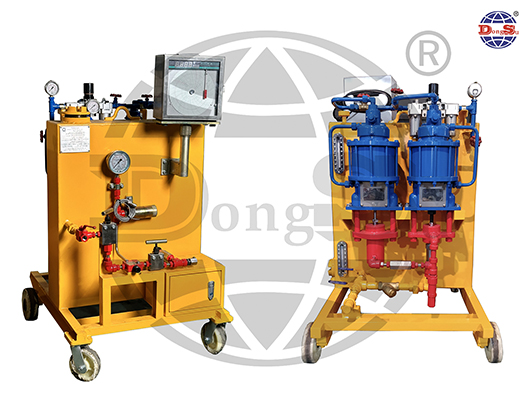
Quality assurance requires a multi faceted testing approach. Structural integrity validation subjects components to pressures above standard working thresholds to prove housing durability. Pressure holding tests evaluate the system ability to maintain a sustained load over a specified duration, highlighting micro creep. Meanwhile, leakage testing pinpoints microscopic seepage at critical sealing interfaces, valve seats, and flange connections to ensure absolute containment under operational loads.
The choice of test medium influences the accuracy of the verification process.
Each medium interacts differently with internal metallic surfaces and seals, preventing false positive results. When selecting test media and validation protocols, operators need equipment that adapts to diverse field conditions. Guangzhou Dongsu Petroleum engineering solutions are engineered to support all media types with model specific configurations. With 18 distinct models available, our units accommodate everything from standard BOP stack testing to ultra high pressure flange validation, ensuring full compatibility with your specific testing matrix.
Having reviewed testing methodologies, let us evaluate the mechanical differences between pneumatic and electric drive systems.
Pneumatic pressure testing equipment relies on compressed air drive systems, making it safe for deployment in hazardous rig environments where electrical sparks cannot be tolerated. These units offer portability, straightforward mechanical designs, and precise pressure multiplication. They suit remote field locations, offshore platform maintenance, and rapid on site commissioning where continuous electrical power supply may be constrained.
For centralized manufacturing workshops and heavy duty service facilities, electric driven pressure test units provide volumetric output and continuous duty stability. Capable of rapidly filling large volume components such as extensive BOP stacks and multi port choke manifolds, electric systems deliver steady pressure generation. When paired with automation, they streamline high throughput testing cycles while maintaining tight tolerances across consecutive runs.
|
Parameter |
Pneumatic Test Benches |
Electric Driven Test Units |
|
Power Source |
Compressed Air |
Electric Power Supply |
|
Primary Deployment |
Hazardous zones and remote rig sites |
Centralized workshops and manufacturing plants |
|
Volumetric Output |
Moderate, pulse based delivery |
High volume, continuous duty output |
|
Portability |
High portability for field service |
Stationary or skid mounted facility setup |
Having compared drive mechanisms, we now examine the rigorous demands of ultra deepwater and high temperature drilling environments.
As exploration expands into ultra deepwater formations, downhole pressures surpass traditional thresholds, pushing operational requirements into extreme thermal and pressure territories. Academic and industrial trends highlight a sharp increase in demand for testing apparatus capable of handling ultra high pressure flanges, heavy wall casing heads, and specialized wellhead assemblies. These extreme environments generate mechanical stresses and thermal expansion challenges, necessitating specialized test architectures that prevent fixture distortion.
Reaching pressures exceeding 20,000 PSI introduces complex metallurgical and fluid dynamics challenges. Standard high pressure tubing experiences measurable elastic deformation at these levels, and conventional elastomeric seals face rapid extrusion. Modern test systems engineered for high pressure applications utilize autofrettage treated components, specialized alloy steels, and metal to metal sealing technologies. Advanced data acquisition systems must be integrated to capture rapid pressure fluctuations without signal distortion.
Having explored deepwater engineering challenges, let us look at common procurement pitfalls and how to avoid them.
A frequent oversight during the procurement of pressure testing apparatus is failing to account for the chemical aggression of testing environments, particularly in sour gas fields. Elastomers and internal valve trims that perform admirably with standard water can degrade rapidly when exposed to corrosive media. Sourcing units equipped with chemically resistant wetted parts, such as Inconel alloys or specialized fluoroelastomers, ensures long term testing reliability and prevents cross contamination in the test bay.
Manual valve operation during high pressure testing exposes operators to significant safety hazards if a line ruptures or a fitting fails. Modern safety engineering mandates the integration of automated pressure relief logic, remote controlled venting valves, and interlocking safety enclosures. These fail safe mechanisms instantly isolate the system, safely vent trapped energy, and protect personnel from pressure release events during proof load testing phases.
Pricing is determined by maximum pressure output ratings, pump displacement volumes, data acquisition complexity, and specialized metallurgical requirements for wetted parts. For accurate pricing based on your specific thermal and pressure requirements, contact Guangzhou Dongsu Petroleum engineering team directly.
Yes. Guangzhou Dongsu Petroleum provides comprehensive support including routine maintenance, recertification services, and flexible equipment rentals through our dedicated technical service center to meet urgent operational timelines. To discuss project specific service support, reach out to our service team directly.
Securing reliable well control infrastructure demands proven engineering heritage and strict manufacturing standards. Guangzhou Dongsu Petroleum combines decades of industry experience with advanced assembly capabilities to deliver dependable oilfield solutions. Whether you manage surface blowout prevention assets or require specialized testing equipment from our portfolio of 18 distinct models, our engineering team supports your operational safety. Explore our reliable High Pressure Test Unit options and contact our specialists today to request customized specifications for your upcoming drilling projects.
By continuing to use the site you agree to our privacy policy Terms and Conditions.