BOP testing requires controlled pressure application and a test setup that matches the equipment being inspected. The choice of test unit affects how pressure is applied, monitored, and recorded during the testing process.
For drilling contractors and well control equipment teams, understanding the required pressure, testing sequence, equipment connections, and selection criteria helps establish a more reliable testing plan.
BOP equipment provides a critical barrier during drilling and well control operations. Pressure testing verifies that the equipment remains capable of maintaining the required pressure before it is returned to service.
Pressure testing can identify leakage around ram assemblies, annular sealing elements, valves, connections, and other sealing points. A stable pressure response during the specified holding period provides evidence that the tested section is maintaining pressure.
A BOP stack contains multiple pressure bearing components with different functions and ratings. Testing the required sections helps confirm that each component can withstand the pressure specified by the approved testing procedure.
Test records give maintenance teams a clear reference for evaluating equipment condition. When abnormal pressure loss or leakage occurs, engineers can identify the affected section and determine whether further inspection or repair is required.
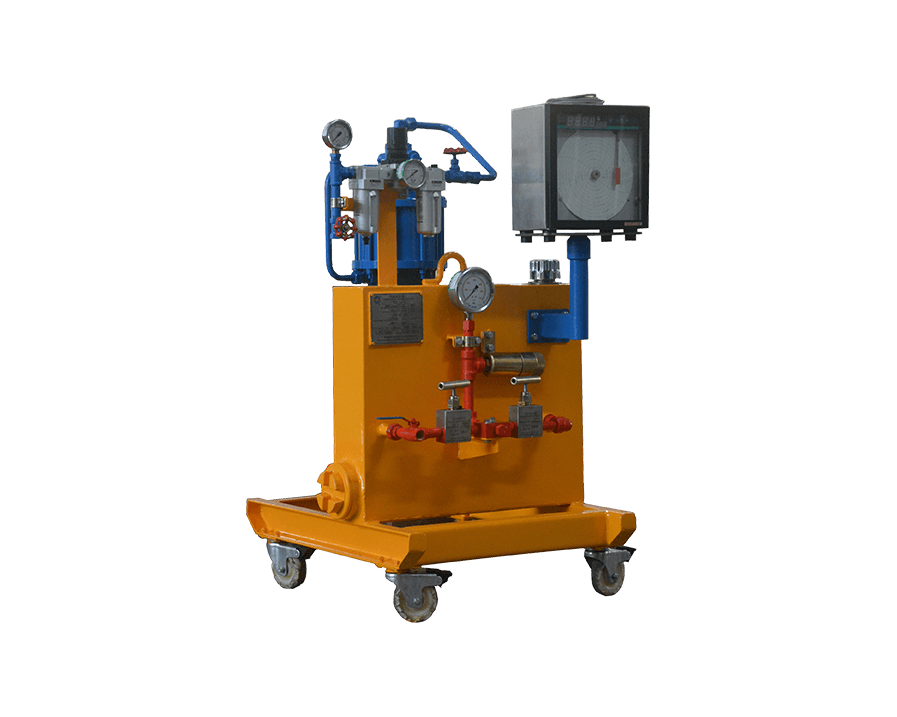
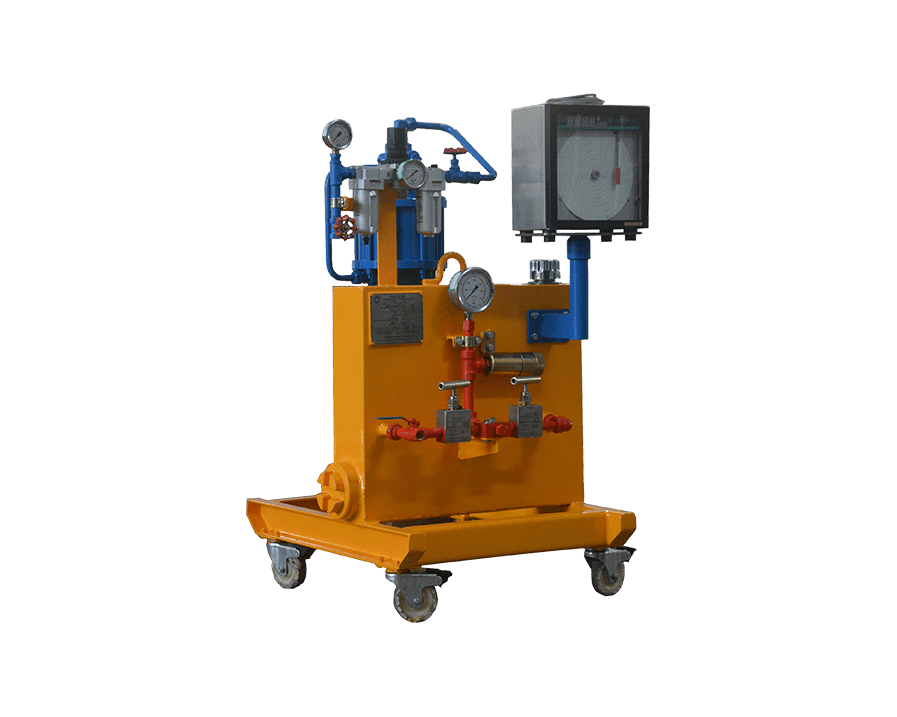
For this type of application, a High Pressure Test Unit can be used for hydraulic testing of BOP stacks, choke manifolds, casing heads, pipe parts, valve parts, and other pressure bearing components used in oil drilling. DONGSU lists QST, DQST, and DST series with pneumatic, electro pneumatic, and electric configurations.
The required test pressure is not the same for every BOP system. It depends on the equipment rating, component being tested, approved testing procedure, and applicable project requirements.
Low pressure testing is used to check sealing performance before higher pressure is applied. It can help identify obvious leakage or sealing problems at an early stage.
The actual pressure and holding period should be determined according to the applicable standard, equipment documentation, and site procedure rather than applying one fixed value to every BOP system.
High pressure testing verifies pressure integrity under a specified test condition. The test pressure should be established from the rated working pressure of the equipment and the requirements of the approved testing procedure.
Before starting the test, engineers should confirm the following:
| Item | What to Confirm | Why It Matters |
| Equipment rating | Rated working pressure of the BOP or tested component | Defines the pressure limit for the test |
| Test pressure | Pressure specified by the approved test procedure | Ensures the test follows the required conditions |
| Test section | Components and cavities included in the test | Defines which equipment is being evaluated |
| Holding period | Time required by the applicable procedure | Allows engineers to monitor pressure stability |
The applicable API standard and its current edition should be checked together with the operating company requirements before establishing the final test procedure.
A BOP pressure test should follow a controlled sequence based on the equipment configuration and approved site procedure.
Check the test unit, hoses, valves, fittings, pressure gauges, and connections before applying pressure. Confirm that the test section is correctly isolated and suitable for the planned test pressure.
Fill the isolated section with the approved liquid test medium and remove trapped air from high points. Proper preparation helps prevent unstable pressure readings during the test.
Increase pressure gradually while monitoring the test circuit for leakage, movement, or other abnormal conditions. Once the required pressure is reached, isolate the test section and maintain pressure for the specified holding period.
Record the pressure response using the approved chart or digital recording method. Any abnormal pressure change should be investigated before the test is accepted.
Release pressure through the designated system in a controlled manner after the test is completed. Inspect the tested components for visible leakage or other problems before returning the equipment to service.
A pressure test unit works as part of the overall well control equipment setup. Its role is to generate and control hydraulic test pressure for the section being tested, while other equipment provides isolation, operation, and pressure control.
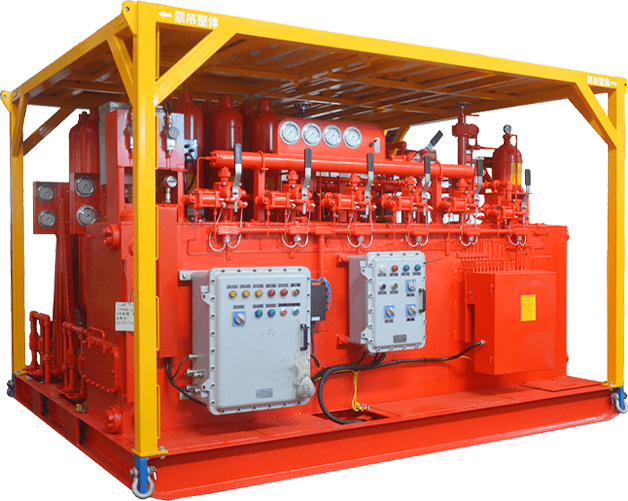
The BOP Control System is used to operate surface mounted BOP stacks as well as hydraulic choke and kill systems and diverter equipment. DONGSU lists pneumatic, electro pneumatic, and wireless control configurations and states that its systems meet or exceed applicable GB and API 16D requirements.
The pressure testing function is different from the BOP operating function, but both systems are part of the same well control environment. Engineers should therefore consider pressure ratings, isolation points, connection arrangements, and operating requirements when planning the test setup.
Pressure testing may also cover choke manifolds and related pressure bearing lines. The test circuit should be configured according to the equipment rating and the approved testing procedure.
DONGSU's Choke Manifold Control Panel is designed to control hydraulic choke manifolds and support well kick and blowout control. The manufacturer states that its control panels meet or exceed API 16C specifications.
The maximum pressure is only one factor when selecting a test unit. Engineers should also consider equipment compatibility, drive configuration, site conditions, and test recording requirements.
The test unit should provide a suitable pressure range for the BOP or other equipment being tested. Its configuration should allow the required pressure to be reached and controlled without exceeding the limits of the test circuit.
Pneumatic, electro pneumatic, and electric configurations can be selected according to the available utilities and operating environment. Pneumatic units use compressed air to drive the pump and generate hydraulic test pressure, while electric configurations may be suitable where electrical power is available.
The installation environment also affects the choice between fixed and mobile equipment. A fixed unit may suit a maintenance facility, while a mobile configuration can be more practical for field testing at different locations.
The test unit should provide stable pressure control and a suitable method for recording test results. Digital or chart based recording can be selected according to the project procedure and documentation requirements.
Pressure loss does not always mean that a BOP component has failed. Engineers should evaluate the entire test circuit before deciding whether repair or retesting is necessary.
Air remaining in the test circuit can make pressure behavior unstable. Proper filling and venting should therefore be completed before pressure is increased.
Changes in test fluid temperature can affect pressure readings. Engineers should consider temperature together with the pressure record and equipment condition when evaluating a pressure change.
Visible leakage around a valve, fitting, connection, or sealing point requires further inspection. The affected section should be isolated and checked according to the approved procedure.
Flexible hoses and other components in the test circuit can respond to increasing pressure. Pressure changes should therefore be evaluated across the complete test setup rather than attributed to the BOP component immediately.
A high pressure test unit can be used for hydraulic testing of BOP stacks, choke manifolds, casing heads, pipe parts, valve parts, and other pressure bearing components used in oil drilling. The exact test configuration depends on the equipment and approved testing procedure.
The test pressure should be determined from the rated working pressure of the equipment, applicable standards, and the approved testing procedure. A single pressure value should not be applied to every BOP system.
Hydraulic testing normally uses a suitable liquid test medium. The selected medium should be compatible with the equipment and specified by the applicable testing procedure.
A suitable BOP pressure test unit helps engineers apply controlled hydraulic pressure and verify the integrity of BOP and related well control equipment. The correct test pressure and procedure should always be based on equipment ratings and applicable requirements.
For project specific test unit selection, pressure range, or equipment configuration, contact the DONGSU team for further technical information.
By continuing to use the site you agree to our privacy policy Terms and Conditions.