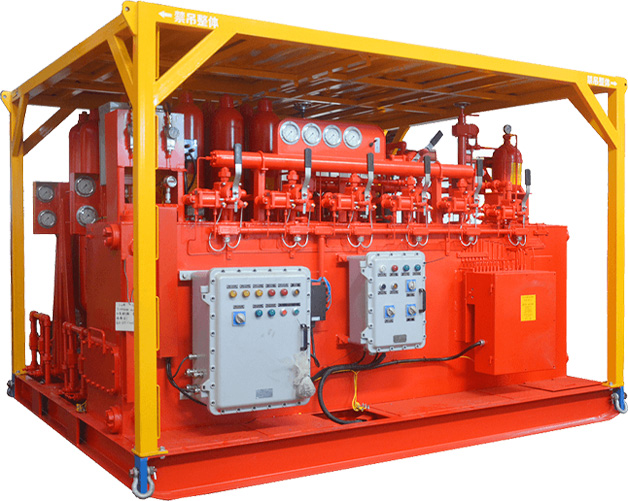
Well control depends on equipment that can respond reliably when drilling conditions change. A surface BOP control system provides the control infrastructure behind critical BOP operations, making its hydraulic configuration, backup capability, and operating arrangement important considerations when planning a drilling rig.
This article explains how surface BOP control systems are configured, how hydraulic power supports emergency shut in, and what operators should consider when evaluating a system for drilling applications.
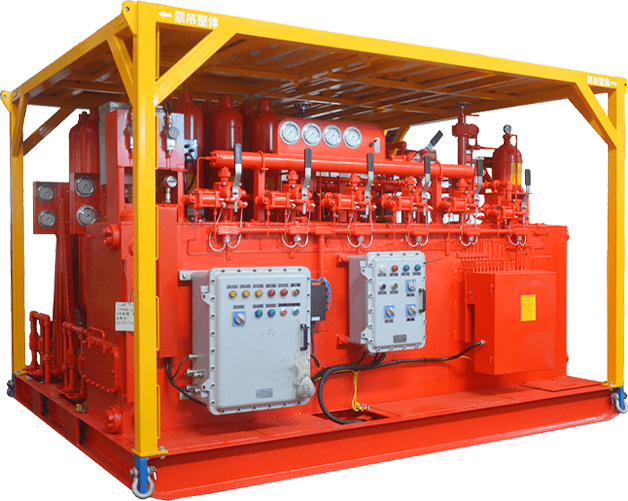
A surface BOP control system uses hydraulic power to operate equipment connected to a surface mounted BOP stack. The system can control BOP equipment as well as hydraulic choke, kill system, and diverter equipment.
Hydraulic pumps provide the working pressure required by the control system. Depending on the configuration, electric or pneumatic pumps can be used to provide hydraulic power and support the required control functions.
The BOP Control System range includes different control configurations designed for surface BOP applications, including electro pneumatic, pneumatic, and mechanical control equipment.
Accumulators store hydraulic energy for BOP operation. They provide a source of stored hydraulic power that can be used when the system requires immediate hydraulic actuation.
Control valves direct hydraulic fluid to the required functions within the BOP control system. The accumulator bank and hydraulic valve arrangement therefore form an important part of the system's operating capability.
The accumulator system can also be configured with backup capacity. According to the manufacturer's product information, the accumulator bank is designed so that failure of one or more accumulators does not result in more than 25 percent total capacity loss.
Control panels allow operators to operate the BOP system from designated positions on the drilling rig.
A driller's panel provides access to BOP control functions from the drilling area, while a remote control panel provides an additional operating location. The configuration can vary according to the BOP equipment and rig requirements.
During a well control event, the BOP control system provides the hydraulic control required to operate the selected BOP functions.
The control system sends hydraulic pressure to the corresponding control circuit so that the required BOP equipment can be operated. The exact sequence depends on the BOP configuration and the operating procedures established for the drilling operation.
Reliable hydraulic control is therefore important when the BOP needs to respond to an abnormal well condition.
A nitrogen backup system can provide an additional emergency pressure source for BOP operation.
The manufacturer's BOP control system information states that the nitrogen backup system can provide high pressure gas to shut down the BOP when the accumulators or pumps fail. It can also provide an emergency gas source for the remote control panel and driller's panel.
This backup arrangement provides an additional control option when the primary hydraulic power sources are unavailable.
BOP control works within the wider well control system. Choke equipment is used for pressure and flow control during well control operations, while the BOP provides a barrier for the well.
A Choke Manifold Control Panel can remotely control the opening and closing of hydraulic choke valves and monitor parameters such as standpipe pressure, casing pressure, and valve position. The product is designed to meet API 16C specifications.
Hydraulic fluid transfers pressure through the control system and supports the operation of hydraulic components.
Fluid selection should consider the BOP control system design, operating environment, component compatibility, and applicable requirements. Maintaining suitable fluid condition is also important for reliable hydraulic operation.
Water based hydraulic control fluid is one option for BOP control applications where the system configuration and operating environment require it.
The manufacturer's BOP & Hydraulic Control Fluid is specifically formulated for surface closed loop or return line BOP control systems used on land and offshore jack ups and drilling platforms. It is also designed for open loop hydraulic systems in deep sea applications.
The product is described as biodegradable and as an alternative to traditional oil based hydraulic fluid. Different formulations are available for operating temperature requirements.
Pressure testing helps verify the integrity of equipment used in well control operations. The test scope should correspond to the equipment configuration and applicable testing requirements.
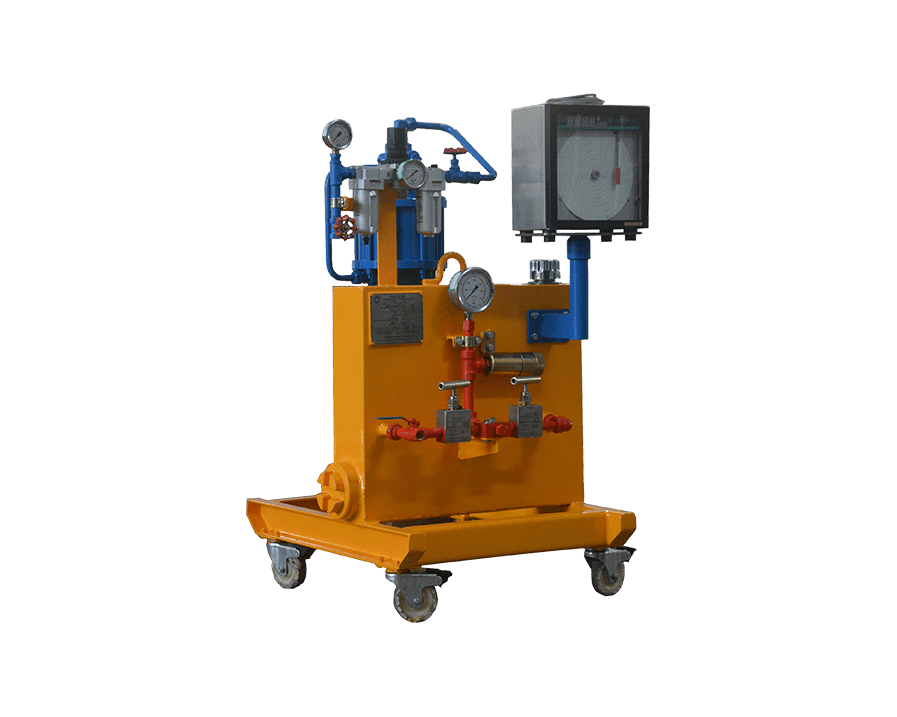
A High Pressure Test Unit can be used for hydraulic testing of BOP stacks, choke manifolds, casing heads, pipe parts, valve parts, and other pressure bearing components used in well control equipment.
Different test unit configurations are available, including pneumatic, electro pneumatic, and electric pressure test units.
Routine inspection helps identify problems that could affect hydraulic control performance.
The manufacturer's maintenance guidance recommends checking accumulator pressure, manifold pressure, annular pressure, and air source pressure on the remote and driller's panels during each shift. Operators should also check the electric power supply, compressed air supply, control valve positions, hydraulic connections, and oil reservoir level.
Weekly checks include pump operation and accumulator charging. Regular inspection of these components helps maintain the readiness of the control system.
Backup functions should also be included in the inspection program.
Accumulator condition, nitrogen pressure, pump operation, control valves, and emergency control functions should be checked according to the applicable maintenance requirements. Keeping both primary and backup systems operational helps maintain BOP control capability when abnormal conditions occur.
The control system should match the configuration of the surface mounted BOP stack.
The required control functions depend on the BOP equipment installed on the rig and may include control of BOP functions, hydraulic choke, kill system, and diverter equipment.
Accumulator capacity, pump configuration, control valves, and panel arrangement should therefore be considered together rather than evaluated as individual components.
The operating method is another important selection factor.
Depending on the application, BOP control systems can use different combinations of electric, pneumatic, electro pneumatic, wireless, or mechanical control arrangements. Remote and driller control panels can also be configured according to the rig's operating requirements.
Emergency backup capability should be evaluated at the same time. Accumulator capacity and nitrogen backup arrangements can affect how the system responds when primary power sources are unavailable.
API 16D should be considered when selecting a BOP control system for drilling applications.
The manufacturer's BOP control system product range includes models that meet API 16D specifications. The final system configuration should also be matched to the BOP stack, operating environment, control functions, and project requirements.
A surface BOP control system is equipment used to control a surface mounted BOP stack during drilling and workover operations. It can also control hydraulic choke, kill system, and diverter equipment.
Key components include hydraulic pumps, accumulators, and control valves. Depending on the system configuration, remote control panels, driller's panels, and nitrogen backup systems can also be included.
An accumulator stores hydraulic energy for BOP operations. It provides stored hydraulic power that can be used when hydraulic actuation is required.
A surface BOP control system provides the hydraulic control needed for reliable BOP operation during drilling and workover operations. Proper selection of hydraulic power, accumulators, control panels, backup systems, and testing equipment helps support well control readiness.
For a BOP control system matched to your drilling application, contact the manufacturer to discuss your system requirements.
By continuing to use the site you agree to our privacy policy Terms and Conditions.