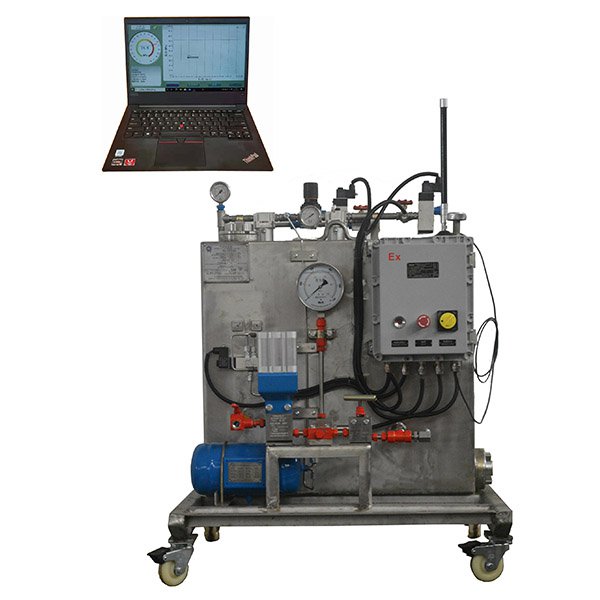
A hydraulic pump test evaluates whether a pump delivers the required flow and pressure under specified conditions. Checking key performance parameters helps engineers identify faults, assess equipment condition, and plan maintenance.
Hydraulic pump testing compares actual output with the manufacturer's rated specifications. It is useful during commissioning, routine maintenance, troubleshooting, and post repair inspections.
Common warning signs include:
Reduced flow or slow actuator movement.
Unstable pressure output.
Excessive oil temperature.
Abnormal noise or vibration.
Increased internal leakage.
These symptoms may also result from problems elsewhere in the hydraulic circuit, so testing helps narrow down the cause.

| Parameter | Purpose | Possible Issue |
| Flow rate | Measures hydraulic output | Reduced delivery |
| Outlet pressure | Checks pressure under load | Pressure instability |
| Oil temperature | Monitors fluid condition | Excessive heat |
| Case drain flow | Checks internal leakage on applicable pumps | Internal wear |
| Noise and vibration | Assesses mechanical operation | Cavitation or component damage |
Confirm the pump model, rated pressure, displacement, and recommended speed. Check oil level, fluid condition, connections, and visible leakage.
Prepare suitable flow meters, pressure gauges, and temperature sensors. Each instrument must have an appropriate measurement range and pressure rating.
Start the pump under the manufacturer's recommended conditions. Once operation stabilizes, record initial flow, pressure, temperature, and speed.
Next, gradually apply the required load using a suitable test circuit. Record flow and outlet pressure at specified operating points. Never exceed the pump's rated limits.
For pumps with a case drain connection, measure leakage flow under specified conditions and compare it with manufacturer limits. Also monitor temperature, pressure fluctuations, and abnormal vibration.
Flow meters measure hydraulic output, while pressure gauges and sensors monitor outlet pressure. Temperature sensors track oil conditions during operation.
The instruments should match the pump's flow range, pressure rating, and test requirements.
The required test setup depends on whether the task involves pump performance measurement or pressure testing of hydraulic equipment.
DONGSU's hydraulic pump testing equipment category introduces hydraulic testing equipment and related applications. Its high pressure test units are also used for BOP stacks, choke manifolds, casing heads, valves, and other pressure containing components.
For example, the QST70-JWK pressure test unit uses compressed air to drive a pneumatic pump and has a listed working pressure of 70 MPa. It is a pressure testing unit, not necessarily a dedicated hydraulic pump performance test bench.
Compare measured flow with manufacturer data at the corresponding pump speed and operating pressure. Lower output may indicate internal leakage, wear, or a control problem.
For applicable positive displacement pumps, volumetric efficiency can be expressed as:
Volumetric Efficiency = (Actual Flow / Theoretical Flow) × 100%
The result should be assessed against the specifications for the particular pump model, not a universal acceptance threshold.
Pump speed, operating pressure, oil temperature, and viscosity can all affect measurements. Record these conditions with the test results.
Measurement location also matters. Pump outlet flow, downstream supply flow, and case drain flow represent different conditions. A reduction in downstream flow does not automatically indicate pump failure.
For consistent evaluation, use manufacturer specifications and applicable standards. ISO 4409 provides methods for measuring the steady state performance of positive displacement pumps and motors.
Check hydraulic oil condition, seals, hoses, and connections for contamination, damage, or leakage. Replace worn components according to manufacturer recommendations.
Record pump model, test speed, pressure, temperature, flow, and any leakage readings. Comparing historical results helps identify performance changes and plan maintenance.
DONGSU provides hydraulic equipment maintenance for BOP control systems, choke manifold control systems, and high pressure test units.

A pump can sometimes be tested without removal by connecting suitable instruments to accessible measurement points. The method depends on system design.
A basic flow and pressure check may take less time than a full diagnostic test. Pump type, operating conditions, and required measurements affect the duration.
Testing after repair helps verify that the pump meets the required specifications and that the original fault has been addressed.
Accurate hydraulic pump testing supports fault diagnosis and maintenance decisions. For related high pressure testing equipment and well control system support, contact the DONGSU team.
By continuing to use the site you agree to our privacy policy Terms and Conditions.